Author Archives: Any Key Music

AKMS Students have a 100% SUCCESS RATE In Playing The Piano By Ear When They Follow This One Criteria

“Seek To Understand”


Proverbs 4:7 states “Wisdom is the principle thing, therefore get wisdom, but in all thy getting, get understanding”.


It makes no point to share something like chord progressions or musical phrases with someone who does not have the capacity to retain the information shared.  If I don’t understand why 2 + 2 = 4, how can I handle 298764 x 2?  I have a quote that simply states, “To Do What Advanced Piano Players Do, You Need To know UNDERSTAND what Advanced Players KNOW”.


More Video Tutorials

More Video Tutorials

YouTube is filled with millions of  videos of piano experts offering their tutorials as an answer to your “how do you play piano by ear” questions.  They will show what they did, but WHY DOES IT WORK?  If you can’t answer that question after the tutorial is done, then you really didn’t learn anything.  I know that’s strong, but the truth does hurt.  The real truth is, piano and other instruments are easy to play by ear, once you understand the language.


Playing piano by ear is not the ability to play only one style.  True playing by ear is the ability to play any style ON YOUR OWN; and that ability only comes with UNDERSTANDING.  PLEASE DON’T BE FOOLED ANYMORE!!


The Any Key Music System’s focus is to get the student to really UNDERSTAND the language of music and know WHY everything works in music.  When they take my advice and do every AKMS exercise, even if they’ve had prior lessons or musical experience, the results are 100% predictable.


Now I know you may be skeptical (if you’re not an AKMS user) and may be wondering, “have you ever had anyone that didn’t get the results”?  My answer is Yes100% of the people that didn’t do every AKMS exercise.  So the criteria to follow if you desire to have the 100% Success Rate in Playing The Piano By Ear, DO EVERY AKMS EXERCISE.


I look for to helping you reach your musical goals.

God Bless

Robert

ARE YOU REALLY BEING TAUGHT HOW TO PLAY MUSIC BY EAR? or ARE YOU BEING SOLD THE ILLUSION THAT YOU ARE?

ARE YOU REALLY BEING TAUGHT HOW TO PLAY MUSIC BY EAR? or ARE YOU BEING SOLD THE ILLUSION THAT YOU ARE?

“IF YOU CAN HEAR IT, YOU CAN PLAY IT!!”

A wonderful, musically sexy and clever marketing slogan to appeal to those with the desire to learn to play music by ear. Wouldn’t that mean that the courses making these claims can empower you to play any song you HEAR; whether on CD, MP3 or Radio? Wouldn’t that mean that after completion of that course, you should be able to use the skills learned and figure out any song on your own without visual tools (Videos/DVDs, YouTube tutorials)?

How’s it going for you?


If you can’t do the above even after completing these other courses, perhaps you may be in the category, “IF YOU CAN SEE IT, YOU CAN PLAY IT!!”. Meaning, you were not taught how to play music by ear.

If an English teacher taught you how to speak English, would you have to keep coming back to that teacher to learn more sentences? Obviously not. The truth is, music is a language and when you really understand that language, and how to musically speak it, you can duplicate anything you hear.

Here’s my definition of “Playing Music By Ear” – “The ability to perform a musical composition without the need of ANY printed sheets of music to direct ones progression; rather it’s to progress with a combination of understanding, sound recognition, memory, instinct and feeling.”

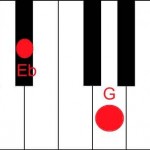
The Any Key Music System™ is unlike any you’ve experienced before. The main difference with other programs versus the “Any Key Music System™” is they specialize in showing and telling you the answers in the forms of written notation,  video/dvds, filled in chord diagrams, scale diagrams of the piano keys and lots of other written and visual material.


“I call these ‘Illusional Ear Methods’. I believe that any program that does this is indirectly telling you that they don’t believe their program can truly develop your ears.”


“Once Again I Ask You, How’s it going for you?


“Do you want to learn how to play piano by reading what’s on paper. Or, do you want to learn how to listen and play anything just like ear musicians have been doing for centuries? I myself have been doing this since the age of 3 and have been teaching this art for many years.”

AKMS’ Technical Definition

I – Illusionary: the misleading of one’s perception of reality.

E – Ear: a membrane of the upper body which equilibrates sound vibrations to maintain a balance to one’s auditory nerve:

M – Method: the orderly plan of executing a structural set of actions.

Symptoms: Depression and frustration of not being able to do what was imagined, or taught after paying for it: Feeling a sense of loss because the results of the lessons did not seem to endure over time: Still feeling a strong sense of wanting more; not fulfilling: Harbouring a sense of disbelief with all the money spent, yet with not much to show for it: Feeling limited and having a deep sense of never seeing the climax of one’s full potential.

The Any Key Music System™” is designed to primarily use your ears, mind, hands and a keyboard. The entire system contains practically all the teachings you’re going to need to succeed.

Purposely, your lessons are on CD’s, therefore, channeling your focus to your ears, as opposed to books and videos, which put more emphasis on your eyes. “I’m not against these things, but my thought is why don’t we learn how to play first?”

Picture going through a grade one test in math class, what if above every question on the sheet, your teacher wrote the answers down for you to copy and fill in the blanks? Would you like that? Would you want to be in that class? “When I was in school, I might have thought that it would have been great if all my classes were like that. Most of us would. You’d come out with an A, but be honest, did the teacher really help you?”

Did he/she teach you how to figure out the answers?


Most likely not. You see that’s the mind component that would missing in that teaching practice. So then when you’re put in a situation to use your math skills outside of the class, you’ll shut down, lose confidence, and be lost because you never really UNDERSTOOD the “HOW TO” in the first place. You were able to get by because you simply copied the answers that were given to you (YouTube videos showing you hands on a keyboard and a computer generated keyboard above illuminating which keys where played).

Ultimately that’s not fair to you, and it doesn’t really help you.


I promise that won’t happen with the Any Key Music System™, because my system balances what I teach with what you can naturally already do in order to maximize your results.


“If you can hear it,

you can play it and understand it,

because I can teach it. And I’ll prove it.”


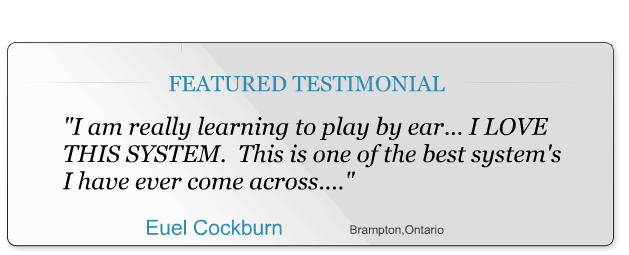
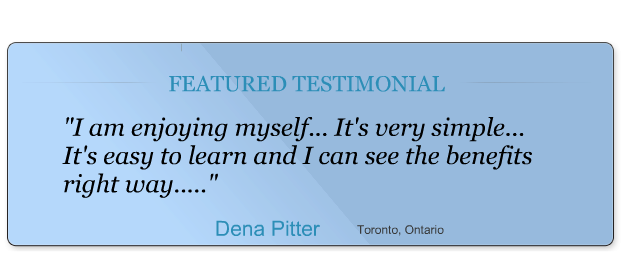
Check out some of the testimonials I’ve received from those who are using then Any Key Music System™.


The Best Method To Learn Major Scale Fingering On Piano – Understanding vs Memorizing

Just in case you struggled with your fingering for the Black Key Major scales.  Here’s the easiest way to learn them; Understanding Why They Work as opposed to Memorizing them.  Here’s an excerpt taken from inside of the AKMS Membership.

Button - Vol.1 - Week 5


Real People With Real PLAY BY EAR Results

IF THEY CAN DO IT, SO CAN YOU!!

Joshua – 10 Yrs Old  “Lord I Lift Your Name On High” [ALL KEYS] 


Kishana – 11 Yrs Old – “No One” [All Keys]


Colin – 9 Yrs Old – “Memories” By Ear (From Musical “Cats”)

Marlon – Playing “I Trust You” (James F.)


Joyce – 60+ Yr Old (After Brain Surgery) – Playing Her Favourite Songs By Ear


Joshua 10 Yrs Old – Classical Song in All Keys  


Any Key Music UPDATES – Introducing Samuel Jr.- 8 Yrs Old at 3 Sessions

My slogan states that I teach people how to “Master The Art Of Playing Piano By Ear in 1 Year!  And I stand behind that 100%.  However I know that it is usually a lot sooner, especially when someone follows and completes of the exercises.


Here’s an 8 year old who is already playing by ear just after 3 sessions of the Any Key Music System.  I look forward to hearing his progress when he turns 9 years old.


Hallelujah (Leonard Cohen’s) – Robert Chambers Plays Melody, Chords & Bass Line ALL Played with ONE HAND!!

Robert Chambers plays Leonard Cohen’s “Hallelujah” (also in the movie “Shrek”);

The Chords, Melody’s and Bass lines are all played with one hand (his left hand) to show the independence one can expect as they complete the Any Key Music System.

He also adds the Any Key Music trademark, playing it in ANY KEY.  However, here he only plays it in 4 keys.

Robert quotes: “I think this song was supposed to be an anthem to God…Just felt like playing it with my Left Hand.”


MUSIC READER SHARES HOW THE ANY KEY MUSIC SYSTEM IS HELPING HIM UNDERSTAND THE MUSIC THAT’S WRITTEN ON PAPER

Hi Robert,

I saw all this recent “drama” regarding your comments about
inconsistent or incorrect theory and I just wanted to chime in. I
don’t need it to be public but I am also a bit passionate about the
subject.

I started out with traditional lessons and I am actually quite good
at reading music. In fact, my reading is probably better than my
actual playing and I would consider myself an intermediate level
player.


Traditional methods of sight reading did not teach me the “language
of music” but it caused me to rely on sheet music whenever I wanted to play a song. Your play by ear program is not the only program
that I’ve come across but until I started to understand the the
“why” of music, this is what unlocked the keys to play by ear and
that is what learning music should be all about. Because now I’m in
a better position to play the songs that I WANT to play and actually
understand what I’m playing and be able to unlock it. I didn’t get
extremely far in the traditional system (due to the cost of lessons)
but if I compare the two I am much more empowered now.
I must say that THEORY is very important in music and I consider
theory to be apart of the musical language, like the fact that a
Sus4 chord is made up of 1 4 5, I consider that theory, and the fact
that the 5 chord resolves to the 1, I consider all this important
theory in understanding the WHY of music and the musical language. I
also see where you are going when you say that a lot of the
traditional theories just put things out there for the sake of
“giving it a name to make it official“.


(Traditional Theorist #1) speaks of the reason why it is called diminished is because the interval of the 4th and 5th are perfect? But, what makes an
interval perfect? Is it based on how it sounds? To me, it sounds
like someone a long time ago decided to give it a name. I DO think
intervals are important and understanding the intervals in terms of
how they sound in relation to each other and recognizing them by ear
and what kinds of chords and sounds they make. But to me, calling it
Perfect, seems like an arbitrary name that someone chose.
He also says that it will make sense when you read music. But I read
music and it still didn’t make sense to me.


With respect to reading music, it’s a great skill to have. Before
when I was reading music, I was literally following what was there,
but now when I look at the sheet music, I break it down based on my UNDERSTANDING of music, the way music follows a certain direction, i.e., circle of 5ths/4ths and what chords appear when and where and
why…so now that I UNDERSTAND music, even reading music is
heightened. So if there is a song that I am having trouble figure
out because it is doing a lot of advanced licks/tricks and newer
sounding chords, I will get the sheet music and then apply my
understanding to determine why certain chords were used , how it
makes sense, and figuring out the progressions. Also, sheet music is
good for picking up licks and tricks of songs in a certain style,
which can still be picked up by ear but can be challenging and comes
with time and practice as your ear improves.

I believe the ability to play by ear is extremely powerful and
unlocks vast musical understanding even to the musician who knows
how to read music. Music is about hearing and the traditional
methods don’t emphasize playing by ear enough and if I had started
out on that route, I would have been a lot further then I am now. I
had to search for these “keys” myself to unlock it and now that I
have the understanding, I can appreciate music more.
Now when I read sheet music, I know exactly what chords I’m playing
or if I just see the chord symbol names, I can make the chords up on
my own, and I see which inversions were chosen and what’s most
important is I determine the overall progression because that’s what
music is all about.


Anyway, that’s just my two cents. Those traditionalist want to
“protect” their institutionalized methods because they invest a lot
of money in it but I agree that a few basic principles from the AKMS
will kick start anyone in their musical understanding.
So just wanted to show support for the RIGHT way that music should
be taught, its about HEARING first. Yes we need a language to
communicate our compositions to others but that can be easily done
through numbers and chord types, a simple chord chart and then the
musician can interpret, etc.

My question to you is, when listening to more advanced songs where
there is a lot going on and singers doing the melody, it can be VERY
challenging to pick out the baseline and chord types, what do you
suggest as a way to make this process easier? What are your best
recommendations for intermediate to advanced ear training?

–AKMS USER


ANY KEY MUSIC – ROBERT’S RESPONSE

Hi AKMS USER,

WOW, what a great message. What you stated is exactly my point.
There is nothing wrong with reading music, it’s just the methodology
that is unfortunately making it harder than it really is. When you
understand the music, then you can really appreciate what the composer
came up with. My wife will tell you, I constantly say that Bach,
Mozart, etc.. were geniuses, why? Because I understand their high
level of musical understanding and appreciate it so much.

Anyhow, in terms of your questions, great ones by the way.

“My question to you is, when listening to more advanced songs where there is a lot going on and singers doing the melody, it can be VERY challenging to pick out the baseline and chord types, what do you suggest as a way to make this process easier? What are your best
recommendations for intermediate to advanced ear training?

My Answer:
My recommendation is that people should understand all the principles
of playing by ear. Many people think that playing by ear is just
that, using your ear. However the #1 skill to playing by ear is using
your mind to do all the work. That’s why the first thing I cover
before even licks, tricks, etc… is knowing how to play everything in
every key with ease. To do that, you have to have a certain mindset.

I know that you have completed Volumes #1 – #3 and I’m glad that
things are already clicking for you. In Volume #4, you will learn the
final principles that are going to complete the music language puzzle.
You’re going to see how everything is tied together.

Also even though the keyboard parts you are trying to pick up by ear
can get covered, all of the stuff you hear in a song like, the singer,
chords, other instruments, bass lines, etc.. are necessary parts in
fingering out what you’re hearing.

You’ll have real examples and exercises to strengthen this in you
Volume #4. Keep me posted.

God Bless

Robert